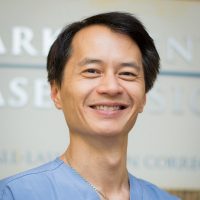

LASEK
LASEK in a Nutshell:
“Because Non-Cutting is the Safest”™

Why is LASEK non-invasive? Because it’s non-cutting. This means that no cut is made into your eye with a metal blade (as in straight LASIK) or with a laser (as in IntraLase or i-LASIK or femtosecond LASIK). No flap is cut into LASEK, so you don’t have to worry about dry eyes (from cutting the corneal nerves) or night glare (from having a 2-piece cornea forever).
If you get LASIK or Smile and get poked in the eye with a fingernail, your flap can get torn off, and you will see badly forever, since we do not have an artificial cornea to replace a torn-off flap. That’s why it’s almost malpractice to LASIK a person who engages in martial arts, kickboxing, or extreme sports. And why Navy SEALs and other Special Forces personnel are not allowed to get LASIK–only PRK (which hurts and takes forever to heal) or LASEK.
Dr. Chynn has performed more LASEKs than ANY other surgeon in the USA, because he helped invent it when he was at Harvard (with Drs. Jon Talamo and Juan Carlos Abad, with whom he published a paper).
LASEK is called an Advanced Surface Ablation (ASA) by eye surgeons, to distinguish it from the non-advanced PRK (the original way to perform laser vision correction).
LASEK is the only modern non-cutting technique that exists to perform laser vision correction. In LASEK, instead of cutting your cornea in half, lifting up a flap, then lasering a deeper layer of your cornea, Dr. Chynn lasers the front surface of your cornea–eliminating the need for the (risky) cutting step. The most common complaints after LASIK are dry eyes and night glare, which are caused by the flap. So no flap = no dry eyes or night glare.
LASEK is also much easier to enhance if that’s necessary, because you don’t have to “dig” up the old flap, or cut a new one–both of which sound problematic, because they can be problematic. To enhance a LASEK, all you have to do is laser the surface another 5 seconds!
Comparison: PRK/LASEK, Pneumo-LASEK, LASIK, Smile
| Feature | LASEK | Pneumo-LASEK | LASIK | Smile |
|---|---|---|---|---|
| Corneal Integrity | Non-cutting, so no no chance of the flap coming up later if your eye gets poked and losing vision permanently, because there is no flap | Also non-cutting, so no risk of late trauma; cornea afterwards is in 1 piece, not 2 pieces | Cornea is weakened by the flap and is forever in 2 pieces, which can cause night glare, and if poked in the eye, the flap can get torn off, after which you'd never see well | Cornea is cut in 2 places, to enable removing a small piece of cornea, although if you get poked in the eye, the flap cannot get torn off |
| Flap Creation? | No corneal flap No risk from late trauma (getting poked in the eye) |
No corneal flap No risk from late trauma (like getting poked in the eye) |
Yes Risk of late trauma forever |
No No flap to get ripped off from minor trauma |
| Long-Term Stability | Permanent vision correction, even if you are in your 20s | Permanent vision correction, even if you are in your 20s | Permanent vision correction, unless you're in your 20s, because no LASIK surgeon in NYC overcorrects to account for myopic progression | Permanent vision correction, unless you're in your 20s, because no LASIK surgeon in NYC overcorrects to account for myopic progression |
| Post-Operative Comfort | Very mild discomfort No pain whatsoever |
Very mild discomfort No pain whatsoever |
No pain or discomfort initially, but sometimes causes permanent dry eye symptoms (itchy, scratchy, etc.) | No pain or discomfort, rarely causes dry eyes afterwards |
| Procedure | Uses a gentle alcohol solution to remove the skin (epithelium) of the cornea, then the laser reshapes the cornea to eliminate your prescription | Uses an air suction device that Dr. Chynn invented & is patenting (he holds several US patents) to eliminate the need for alcohol, making it painless & speeding recovery | Cuts a flap to access the cornea, then the laser reshapes the cornea. Complications include an incomplete flap that blocks the laser, or a free flap that's difficult to put back into place | Uses a laser to cut 2 flaps into your cornea that connect, allowing the surgeon to use forceps to extract & discard a small piece of cornea, which results in changing the shape |
| Recovery Time | 3-4 days | 2-3 days | 1-2 days | 1-2 days |
| Risk of Dry Eye | Almost zero, because no flap is cut, so your corneal nerves are intact (cutting the corneal nerves are the cause of dry eyes postop) | Almost zero, because no flap is cut, so your corneal nerves are intact (cutting the corneal nerves are the cause of dry eyes postop) | High, most patients eyes are more dry after LASIK, so you should NOT get LASIK if you already have dry eyes, or it will be WORSE | Medium, causes less dry eyes than LASIK (bc the 2 cuts mostly avoid the nerves), but more than LASEK or pneumo |
| Risk of Flap Complications | Zero, because there is no flap | Zero, because there is no flap | High, can have button hole flap, incomplete flap, free flap, misaligned flap, debris under flap, Sands of the Sahara (DLK) under flap, flap striae, epithelium ingrowth, flap slips, torn off flap | Low, because there is no flap; however there are 2 cuts into your cornea, so your cornea will be weaker afterwards, and more susceptible to trauma |
| Suitable For | Only safe procedure for patients with thin corneas, dry eyes, or those who engage in boxing, martial arts, extreme sports, or are in military special forces (Navy SEALs, Green Berets, Army Rangers, etc.) | Same as for LASEK, or for people who just want a safer procedure with less chance of dry eyes or night glare than LASIK or Smile, and are willing to tolerate a recovery that's 1-2 days longer | For patients who want the fastest recovery–and are willing to accept slightly more risk during the surgery, and for the rest of their lives (permanent dry eyes, night glare, and risk of future trauma) | For patients who want a fast recovery, and less risk for dry eyes than LASIK, but more risk of dry eyes than LASEK or Pneumo-LASEK |
| Visual Outcomes | With an MD performing the preoperative tests, an experienced surgeon, and a patient who is compliant with their postop drops & visits, if you choose one of our HD Packages, we can make 50% of our patients see BETTER than they ever did in glasses or contacts–without them! | With an MD performing the preoperative tests, an experienced surgeon, and a patient who is compliant with their postop drops & visits, if you choose one of our HD Packages, we can make 50% of our patients see BETTER than they ever did in glasses or contacts–without them! | LASIK can also make people see better than glasses or contacts and better than 20/20, but no LASIK surgeon in NYC intentionally overcorrects myopes in their 20s, which means as their eye grows, they will slip from 20/20 to slightly worse, like 20/25 or 20/30, and might need an enhancement eventually | Smile can also get people seeing better than 20/20. But is a bad choice for people with high prescriptions, like myopia over -6, hyperopia over +2, or astigmatism worse than 2D, because it isn't FDA approved for these cases, because some of the prescription will be left over (Rx is past parameters) |

Advanced Surface Ablation, New York
Recently, there has been excitement about “Advanced Surface Ablation” as the safest technique in laser vision correction. But what exactly is ASA? The term “Advanced Surface Ablation” or ASA was created to distinguish the modern way to the non-cutting technique to correct vision, from the earlier PRK, or photorefractive keratectomy.
Both PRK and ASA avoid cutting so are safer than LASIK, “bladeless” LASIK, and SMILE, which all require incisions to be created into the cornea, thereby permanently weakening it and increasing the chance of corneal ectasia (bulging out) or a disease called keratoconus (KC). PRK and ASA lasering only the cornea surface, without the need to go deep into your eye. This is why both PRK and ASA are also known as “surface ablations” — because the laser is removing tissue (“ablating”) from the surface of your cornea.
PRK was the original laser vision correction (LVC) procedure, and has been around since 1995. However, it never became popular because it’s very painful (requiring the patient to take narcotics), and recovery is very long (meaning you don’t see perfectly for weeks to months). This is because PRK involves using an Amoils brush to “sandpaper” off your corneal epithelium, or a “hockey stick” metal instrument to scrape off the skin of your eye. Both techniques are traumatic to your eye and kill millions of corneal epithelial cells, which release inflammatory mediators such as cytokines, triggering the inflammatory cascade, causing pain, prolonged healing, and in some cases, scarring and visual loss.
ASA is synonymous with “alcohol-assisted PRK” or LASEK. ASA uses a dilute alcohol solution to delaminate, or separate the epithelium from the underlying cornea. The skin is removed in an “en bloc” dissection, as one clean sheet, and placed on the surgical tray, where again millions of epithelial cells die & release cytokines. But who cares? These inflammatory triggers never touch the cornea, so the inflammatory cascade is never triggered! Thus: no pain or prolonged healing or scarring! Dr. Chynn helped invent LASEK when he was at Harvard with two of his mentors, Juan Carlos Abbad, MD, and Jonathan Talamo, MD (the three surgeons later published a paper together).
Dr. Chynn has performed more ASA or LASEK procedures than any other eye surgeon in the US–over 30,000, which is also more than every other eye surgeon in NY, NJ & CT–combined! So if you are in the NY Tri-State Region, and want LASEK, you’re in luck! Because we sometimes have patients flying in from other states, or even other countries, because they want the most experienced LASEK surgeon in the US.
Between 2015–2021, Dr. Chynn also performed about 5,000 epi-LASEK (also known as epi-LASIK) procedures, which is an even more advanced technique, where a plastic separator is used to delaminate the corneal epithelium, avoiding the need for alcohol, which is toxic to the regrowing corneal epithelium. This makes recovery even quicker and approaches the most rapid recovery of a LASIK or SMILE–but with better safety. Dr. Chynn has performed more epi-LASEK (or epi-LASIK) procedures than any other surgeon in the US and was instrumental in moving the entire profession of eye doctors to call the technique epi-LASEK instead of epi-LASIK (because it’s more like a LASEK than a LASIK). Epi-LASEK is so safe, that in 2020, Dr. Chynn became the first and only surgeon in the world to perform laser vision correction on himself, to prove to the world that this non-cutting technique is so safe, an experienced surgeon can do it himself!
In 2022, Dr. Chynn invented the most advanced ASA technique in the world, which he named “Pneumo-LASEK”. Pneumo-LASEK eliminated the need for the plastic separator. In “Pneumo-LASEK” a gentle vacuum helps Dr. Chynn to remove the epithelium. Dr. Chynn is in the process of patenting Pneumo-LASEK (he has several other US patents)!
Because LASEK and Pneumo-LASEK are both non-cutting, no cutting complication can occur during surgery. That’s what has allowed Park Avenue LASEK to have the ONLY all-glass operating room in the WORLD, where ALL procedures can be watched by the general public! This is similar to the “open kitchen” concept, which can only exist at the very finest dining establishments, because unlike regular kitchens, they have nothing to hide, and are proud of their process! We are also the ONLY laser center in the NY Tri-State Region that allows potential patients to watch a LIVE procedure–again because we will NEVER have a cutting complication!
To book your free consultation, have your questions answered by an EYE SURGEON, or schedule to come in and watch a LIVE procedure (or you can view this on our Instagram Live), call (212) 741-8628, M–F from 9:30 AM–6:30 PM.
We’re conveniently located at: 102 E. 25th St. (& Park Avenue South), New York, NY 10010

Our Videos
Our Videos
#1 Rated
LASEK, LASIK, PRK, SMILE Eye
Surgery Center in NYC
#1 Rated LASEK, LASIK, PRK, SMILE Eye Surgery Center in NYC
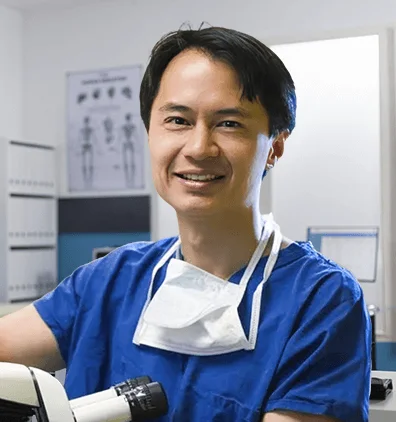

LASEK vs. LASIK
100% Non-Cutting
Ortho-K
Work while you sleep
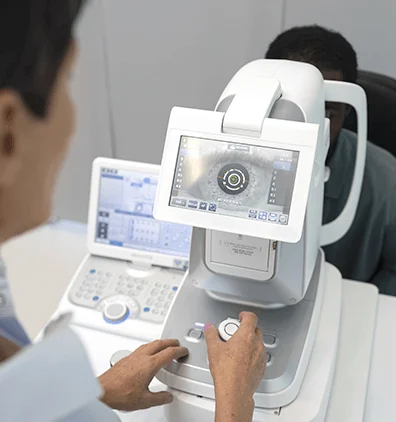
Cross-linking (CXL)
Keratoconus treatment
Eye Jewelry
Introducing the newest trend
Corneal Tattoo
Ink to match your iris
Our Financing Partners
Available for Your Eye Surgery Journey!
See the Possibilities Clearly: Affordable Financing Options Available for Your Eye Surgery Journey


Get Directions to Park Avenue LASEK
102 E. 25th St. (corner of Park Avenue South), New York, NY 10010