Nystagmus & Laser Eye Surgery in NYC

Nystagmus and Vision Correction: Can LASEK Help?

LASEK for patients with Nystagmus who were told they are not candidates for LASIK

Patients with nystagmus are often told they are not candidates for LASIK due to involuntary eye movement and the complexity of their condition.

At Park Avenue LASEK, Dr. Emil Chynn specializes in treating complex cases that other centers turn away, including patients with nystagmus, thin corneas, and high prescriptions.

LASEK is specifically used in these cases because it allows for greater control, precision, and safety compared to traditional LASIK.

The focus is not on forcing LASIK. It is identifying the most appropriate approach based on your eyes, your goals, and long-term visual stability.

Dr. Emil Chynn has performed more LASEK procedures than any other surgeon in the United States, with extensive experience treating patients who were previously told they were not candidates for vision correction.

Dr. Chynn is the only surgeon in the US who is routinely fixing eyes with nystagmus. Your medical insurance may even pay for part of the cost, as we are the only laser center in the USA who accepts medical insurance! Benefits after LASEK in patients with nystagmus include:

WHY NYSTAGMUS REQUIRES A SPECIALIZED EVALUATION

Nystagmus causes involuntary eye movement, which makes standard LASIK procedures more difficult to perform safely and accurately.

This is why many patients with nystagmus are told they are not candidates at traditional LASIK centers.

These cases require advanced planning, specialized surgical techniques, and experience treating complex vision correction patients.

WHY LASEK IS USED FOR PATIENTS WITH NYSTAGMUS

LASEK is a flap-free laser vision correction procedure that avoids creating a corneal flap.

For patients with nystagmus, this approach allows for greater control during treatment and reduces structural risks associated with traditional LASIK.

This makes LASEK the preferred approach for many complex vision correction cases.


WHY MOST PATIENTS ARE TOLD THEY ARE NOT CANDIDATES FOR LASIK

Traditional LASIK involves creating a corneal flap, which requires:

  • high precision tracking
  • stable fixation during surgery

In patients with nystagmus:

  • involuntary movement can complicate flap creation
  • safety margins may be reduced

As a result, many patients are told:

“You are not a candidate”


We Want You To See Better Than 20/20

Ready for your Free Consultation?

Our Videos​

Watch our Video Testimonials, Post-op interviews and Procedure Videos.​

Nystagmus

Treatment of Nystagmus or “Jiggling Eyes”

Actual email from a potential patient to Dr. Chynn: “Dear Dr. Chynn. I have suffered from nystagmus my entire life. I also have a lazy eye, and am very nearsighted and astigmatic, plus my right eye turns in. I was born with ocular albinism. I have seen about a dozen doctors over the course of my lifetime, both optometrists and ophthalmologists. Every doctor said ‘there is nothing that can be done to help you see better, you are just going to have to live with it.’ But I cannot live the life I want like this. I can’t drive a car. I can’t play sports. I feel very uncomfortable socially, and dating is a problem. I’m pretty smart, and have managed to get through high school, and am halfway through college. But don’t I deserve a good job, and a girlfriend, and eventually children? Can’t you help me have a ‘normal life’? The best vision I can get in glasses is only 20/80, which isn’t legal to drive a car, which limits my independence. Please, Dr. Chynn, can you help me? You’re my last hope!”

Jacob Carr, Takoma, WA, June, 2017

Discussion by Dr. Chynn about how he treated Jacob:

We had Jacob schedule a “Remote Second Opinion”, where he paid $500 by credit card, and he then called me on my cellphone using FaceTime (if he had an iPhone) or WhatsApp video (if he didn’t) so I could see the extent of his nystagmus & strabismus (eye turn) with my Fellow, or junior eye surgeon studying with me for 1 year to learn how to deal with these complex issues.

Jacob had a high-amplitude, rapid nystagmus in both eyes, and a right esotropia (eye turned in). He also had a prescription of -9.25 -3.25 x 180 in both eyes, which puts him in the extreme myopia + extreme astigmatism categories, with a visual acuity in each eye with glasses of 20/80 (without he could only “count fingers”). He also had moderate esotropia (eye turning in) of his right eye.

We performed a manifest refraction of both eyes and got him seeing 20/70 out of each eye, or 1 line better on the eye chart than with his current prescription, which was under-correcting his astigmatism. With his head turned, his nystagmus was less, and he also said when he was drunk it was less. So, I told him that I would probably be able to perform my non-cutting LASEK procedure on him without using the fixation ring. That’s a special instrument I designed that I can use to hold his eye in place if his nystagmus would be too bad under the laser, so the laser would treat the center of his cornea.

On the day of surgery, we gave Jacob Valium, FDA-approved dissociative anesthetic, and nitrous oxide (laughing gas) to calm Jacob down, because he was very nervous (partially because he had both never worn contacts before, nor had any prior surgery). I also told him to turn his head under the laser to put his eyes in the direction of gaze where his nystagmus was least (this is called the “null” position). By these methods, I was able to perform the non-cutting LASEK without using a fixation ring, and my J&J/AMO/VISX Star4 SR laser was able to track his eyes, since it captures a digital image of his eye at 60 Hz (60x/second), and uses iris tracking (other lasers sometimes use retinal tracking, which is impossible in nystagmus).

Immediately after surgery, Jacob was seeing 20/100 out of each eye without glasses, which was good. We told him to keep both eyes closed and sleep as much as possible over the next few days, so the skin of his eye that we removed would grow back. He came back to our clinic 1 week after surgery to have his bandage contact lens removed, by which time his vision had already improved to 20/80, which means he was already seeing as well as he did with glasses—without them!

We worked with his local eye MD, who saw him once a month, decreasing his steroid drop from 3x/day, to 2x/day, to 1x/day over 3 months, then he was off all his drops except artificial tears. We also worked with his local optometrist to give him contacts with a very mild prescription at 3 months postop, so he saw 20/50 with both eyes open. So, Jacob was able to accomplish his goal of independence by passing his driver’s license, and having a new, better life!

#1 Rated
LASEK, LASIK, PRK, SMILE Eye
Surgery Center in NYC

#1 Rated LASEK, LASIK, PRK, SMILE Eye Surgery Center in NYC

Dr. Chynn
blue line

LASEK vs. LASIK

100% Non Cutting
Female is putting a contact lens into her eye
blue line

Ortho-K

Work while you sleep

Cross-Linking - Image of Testing Equipment
blue line

Cross-linking (CXL)

Keratoconus treatment

Female Eye
blue line

Eye Jewelry

Introducing the newest trend

An Eye Closeup
blue line

Corneal Tattoo

Ink to match your iris

Have Questions? Call our Office!

(212) 741-8628

We Want You To See Better Than 20/20

Ready for your Free Consultation?

We Want You To See Better Than 20/20

Ready for your Free Consultation?

Our Financing Partners

See the Possibilities Clearly: Affordable Financing Options
Available for Your Eye Surgery Journey!

See the Possibilities Clearly: Affordable Financing Options Available for Your Eye Surgery Journey

Get Directions to Park Avenue LASEK

102 E 25th St, New York, NY 10010

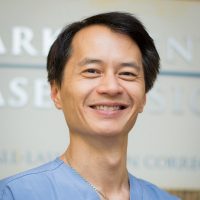
Emil Chynn, MD, MBA, FACS

ASK DR. CHYNN!

Get ONE question answered for FREE by our famous Harvard-trained surgeon who's been featured on Discovery Channel & CNN

Dr. Chynn graduated from Dartmouth + Columbia + Harvard + Emory + NYU & has been on ABC, NBC, CBS & in the NY Times & Wall St. Journal

He’s performed 40,000 LASIK, SMILE, PRK, LASEK, & ICLs. He’s the ONLY eye surgeon in the US who’s had both LASIK & LASEK himself, so knows the pluses & minuses of each!

Dr. Chynn specializes in treating cases which don’t qualify for LASIK, including:

• extreme prescriptions
• thin corneas
• astigmatism
• need for reading glasses

See other Real Patient Questions that Dr. Chynn has answered! Ask Dr Chynn 

  • This field is for validation purposes and should be left unchanged.
  • Please don’t worry – Your information will NOT be automatically added to our database.